Matyas Fazakas
AI creative producer. I direct the film, and build the production system that makes it repeatable.
Commercials and brand films made with generative video, image and voice models, finished to the grade. Each one ran on a workflow designed around its brief, budget and deadline, and every film below has a breakdown that shows it.
- Open to full-time and contract
- Remote from Romania
- US citizen, works US hours
Work
Pick a film to play it. "How it was made" under each one shows the models, the numbers and what broke.
Commercials and brand films
Fashion, spirits, real estate and paid social. Four briefs, four different workflows.
Hotel and travel series
Four films on one pipeline. Built over NGONI, then reused and adapted for each property.
Hire me for
Two kinds of teams hire for this. Here is what I bring to each, and where on this page it's proven.
Production companies and agencies
When the job is a finished film for a brand.
- Finished AI films, end to endLook development, generation, edit, grade, sound and graphics, end to end. Snow Edition · Two Strangers
- Pitch films and moodfilmsA director's treatment turned into moving pictures in days, so the pitch shows the film instead of describing it. 3 to 4 days on Snow Edition
- AI shots inside a bigger productionGenerated scenes cut alongside CGI and other teams' work, matched to the client's locked looks. Edgeworth
- Continuity a client can sign offSame cast, wardrobe, location and light across every shot, through identity sheets and continuity masters. Four locked characters in one room
- Paid social cut for the feed9:16, hook first, graphics built to the frame. The Receipt
AI companies and in-house labs
When the job is getting partners to production-grade results with the tools.
- Workflow designShots stored as data, prompts built by script, self-contained run folders, a picker for review. Built once, reused across projects. NGONI and the hotel series
- Model routingWhich engine for which shot, and why. Stills, image to video, omni reference, multishot. The routing table
- Workflows packaged for othersEvery pipeline written up as a reusable playbook with its rules and failure modes, so a team can run it without me. The pipeline
- Automation at volumeAt Artsimedia I built a pipeline that turned real property listings into 10 finished tour videos a day for real estate agencies. Background
- Working inside hard limitsA daily generation cap, a single 240 credit budget, a meticulous client. The workflow bends to the limit, not the other way round. Limit to workflow
Limit to workflow
The real constraint on each film, and the setup it got because of it.
| Film | The limit | The workflow it got |
|---|
Model routing
The model gets picked per shot, not per project. What I use each one for, and where it breaks.
| Model | I use it for | Where it breaks, and the fix |
|---|---|---|
| Nano Banana Pro | Stills and first frames, location plates, identity and prop sheets. | Obedience drops past about 5 references. One location reference per image: two angles of the same place makes it invent a third. |
| Kling 3.0 | Image to video when the approved still has to survive exactly. Static or one slow move. | Near-zero motion requests come back as a literal still. Breath, fast physics and timelapse skies read fake. |
| Kling 3.0 Omni | Multishot with bound elements: characters and hero objects locked across cuts. | Never re-describe a bound element, or it drifts. Multishot invents new angles on hero objects, so those get a still first. |
| Seedance 2.5 | Shots where physics carry the moment. Omni reference with up to 9 images. Editing a clip instead of regenerating it. | Ignores negative prompts, so everything is phrased positively. It regenerates the frame, so grade and framing can drift from the still. |
| Wan 3.0 | Fast, cheap multishot passes: up to 3 shots and 15 seconds. | Drifts off character references on sharp faces. Faces stay soft, in silhouette or out of frame. |
| Happy Horse 1.0 | Short motion passes with sound generated in the same pass. | Wants 20 to 30 words, plain prose, one camera cue placed last. |
| ElevenLabs, Epidemic | Voice, sound design and music. | Layered and mixed in Resolve, never dropped in raw. |
| Resolve, Remotion, Topaz | Edit, grade and finishing. Graphics built in code. Upscaling. | Grain, halation and speed ramps go on in post. Prompting them is unreliable. |
Field notes
Rules that came out of the films above. Each one cost generations to learn.
- Identity lives in the start frame, not the prompt. Words fix grade, water and sails. They don't fix a distant hull or a face.
- Never let a video model invent a new angle on a hero object. Make the still first, then animate it.
- Naming a thing summons it. Write "no camera shake" in a still prompt and the model starts thinking about cameras. Leave it out.
- Say scale three different ways, or the model quietly normalises it.
- Phrase the look positively and ban the failure explicitly. "The sky is white, not blue" beats either half on its own.
- A clip that looks multishot is often one long take. Verify cuts with scene detection, not by eye.
- Test at 480p, render once at 1080p. Credits go on takes that already hold.
- Never animate an uncurated still. Pick first, then spend the video credits.
- Burn spatial light into the still, add texture in post. Bloom and haze in the image. Grain and halation in the grade.
The pipeline
Built over NGONI, then reused on every hotel film since, and written up as reusable playbooks. Each project adapts it to its own limit, but the spine stays the same.
- Research and grammar. Real photographs of the real place go in as inputs, never out as footage. The house look is measured, not guessed: 9 Aman films, about 560 shots, a 2 second median cut, one slow camera move, roughly 40% locked frames.
- Lock identities first. A neutral sheet per character per wardrobe, prop sheets, and one continuity master per location per light state. Nothing generates without a reference.
- Shots as data. Every shot is a record: continuity state, subject, action, wardrobe, references, bans. Prompts are built by script, so a note like "no camera movement anywhere" is one edit and a rebuild, not 135 hand edits.
- Run folders. One self-contained folder per generation: prompt, negatives, settings and every reference copied in. Five sibling approaches per shot: clean long lens, foreground occlusion, macro, extreme wide, ground level.
- Review in a picker. Every take lands in one review page: pick, reject, notes, prompt edits. Nothing gets animated before it's curated.
- Engine per shot. Kling 3.0 when the still must survive exactly. Seedance 2.5 when physics carry the shot. Multishot for people and nature, never for a hero object.
- Finish. Clips normalised, cut, graded and scored in DaVinci Resolve. Grain and halation go on in post, not in the prompt.
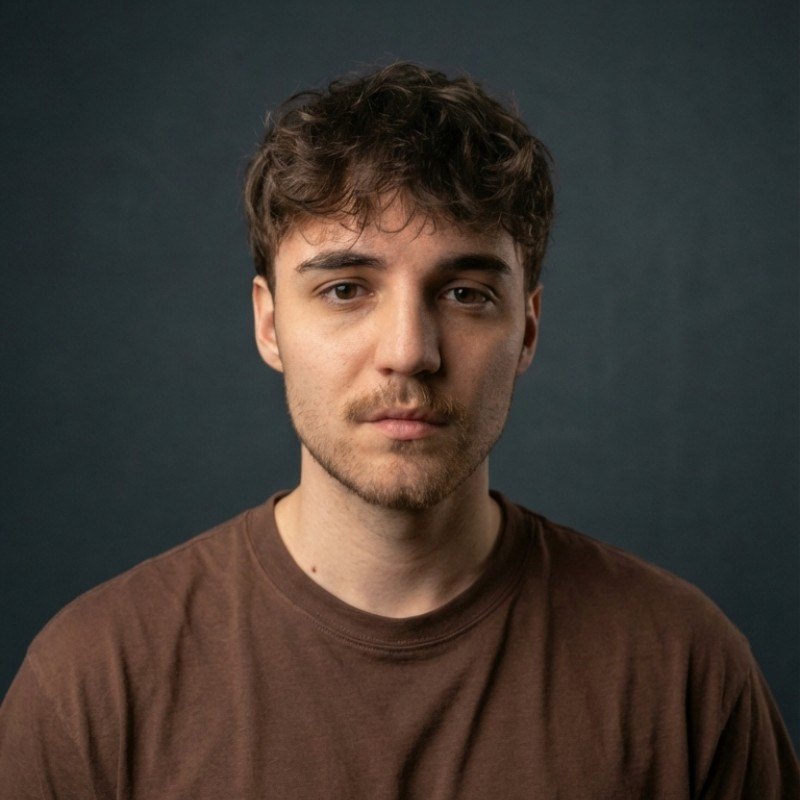
Before AI, 3D
I started as a 3D artist and Unreal Engine 5 animator. That's why my AI work is planned like a shoot: blocked, lit and cut on purpose, not prompted until something looks good.
- 2026 to now
- AI commercial director, Studio Vandor. Client work for Noë & Associates, New York.
- 2025 to 2026
- Co-founder, Artsimedia. AI property tours for real estate agencies. Built an automated pipeline producing 10 finished property videos a day from real locations.
- Earlier
- Freelance 3D artist: archviz, and motion capture animation in Unreal Engine 5.
- 2024
- BA Game Arts and Development, Southern New Hampshire University. Environment design for games.
Tools. Kling 3.0 and Omni, Seedance, Wan 3.0, Veo, Sora, Runway, Nano Banana Pro, Midjourney, Flux, ElevenLabs, DaVinci Resolve Studio, Topaz, Remotion, Claude with my tools connected.
Brands shown are not affiliated with this work unless stated in the film's notes.